Midsummer
The Moon and the SunMidsummer is more than a date in the novel: it sets the time for a Sea People gathering whose communal joy is shadowed by grief, vulnerability, and the long interval before the same conditions return. Its shortest night becomes a narrow opening for reunion and brief pleasure, but the danger posed by people from land has forced the gathering to change.
Calendar and Conditions
The passage names both Midsummer Day and Midsummer Night, locating the gathering at the turning point of the year. This year, Midsummer Night coincides with the dark of the moon. The Sea People plan to rise together at sunset, on the shortest night, when the moon will not reveal them from above. The unusual conjunction gives their meeting a specific temporal condition: they will not gather again under that same pairing for fourteen years.
The timing is therefore practical as well as calendrical. The Sea People are too vulnerable to risk mating beneath the sun, and too few remain to withstand another assault. Darkness does not remove the danger, but it allows them to attempt a gathering they could no longer safely hold by daylight.
A Gathering of Grief and Welcome
For Sherzad, Midsummer holds the promise of return. Her brothers and sisters survived the assault in which she was captured, but their mother, aunt, and uncle—the elders of their family—were killed. She grieves by singing phrases from her mother’s death-song, including an image of her mother looking upon Sherzad’s child. The approaching gathering thus carries both loss and the possibility of welcome: Sherzad expects the other families to rejoice at her return and admire her child.
The planned gathering brings different generations together. Children will play with tame Giant octopuses and tease dolphins, while adults join the whirlpool of the Mating haze. For a time, its shared intensity will ease the Sea People’s grief. The prospect is not a cure for bereavement; it is a brief communal respite, made more precious by the deaths that precede it and by the peril of meeting at all.
A Changed and Infrequent Midsummer
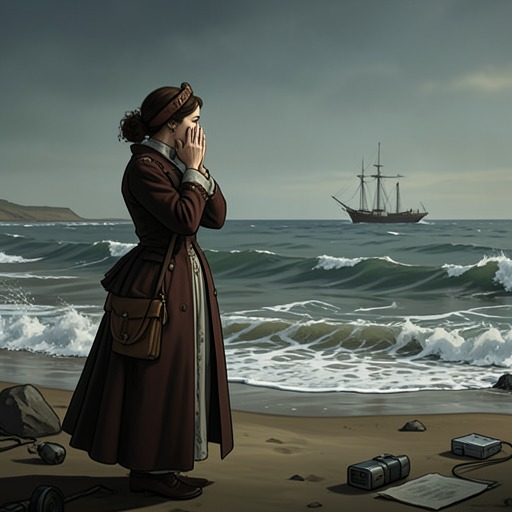
The Sea People’s plan marks a change in custom forced by exposure to human violence: never again will they mate beneath the sun. This year they will gather at sunset, rise to the surface in moonless darkness, and bathe in luminescence, their bodies glowing amid the waves as they come together. The luminous scene joins concealment to visibility: darkness offers protection, while their glowing bodies make the gathering perceptible to one another.
The fourteen-year interval gives the occasion a larger weight. Midsummer’s alignment with the dark of the moon will not recur for the Sea People for that span, so the promised welcome and temporary easing of grief are bounded by a long wait. Before Sherzad can turn toward the gathering, she must discharge another obligation; ahead, two ships cross the waves, one pursued by the other. The planned reunion is set against an approaching danger, leaving Midsummer at once a time of anticipated belonging and a precarious hope.